Thomas Robert Malthus began with two propositions. Population, when unchecked, could increase geometrically. Subsistence, he argued in 1798, could increase only arithmetically. The difference meant that population would press repeatedly against food, checked by later marriage and restraint or by misery and premature death.
Malthus was not simply predicting one dated famine. He was challenging the era’s confidence that political reform could produce indefinite material improvement. If prosperity allowed more people to survive and reproduce, gains in income could call forth enough additional population to pull living standards back toward subsistence.
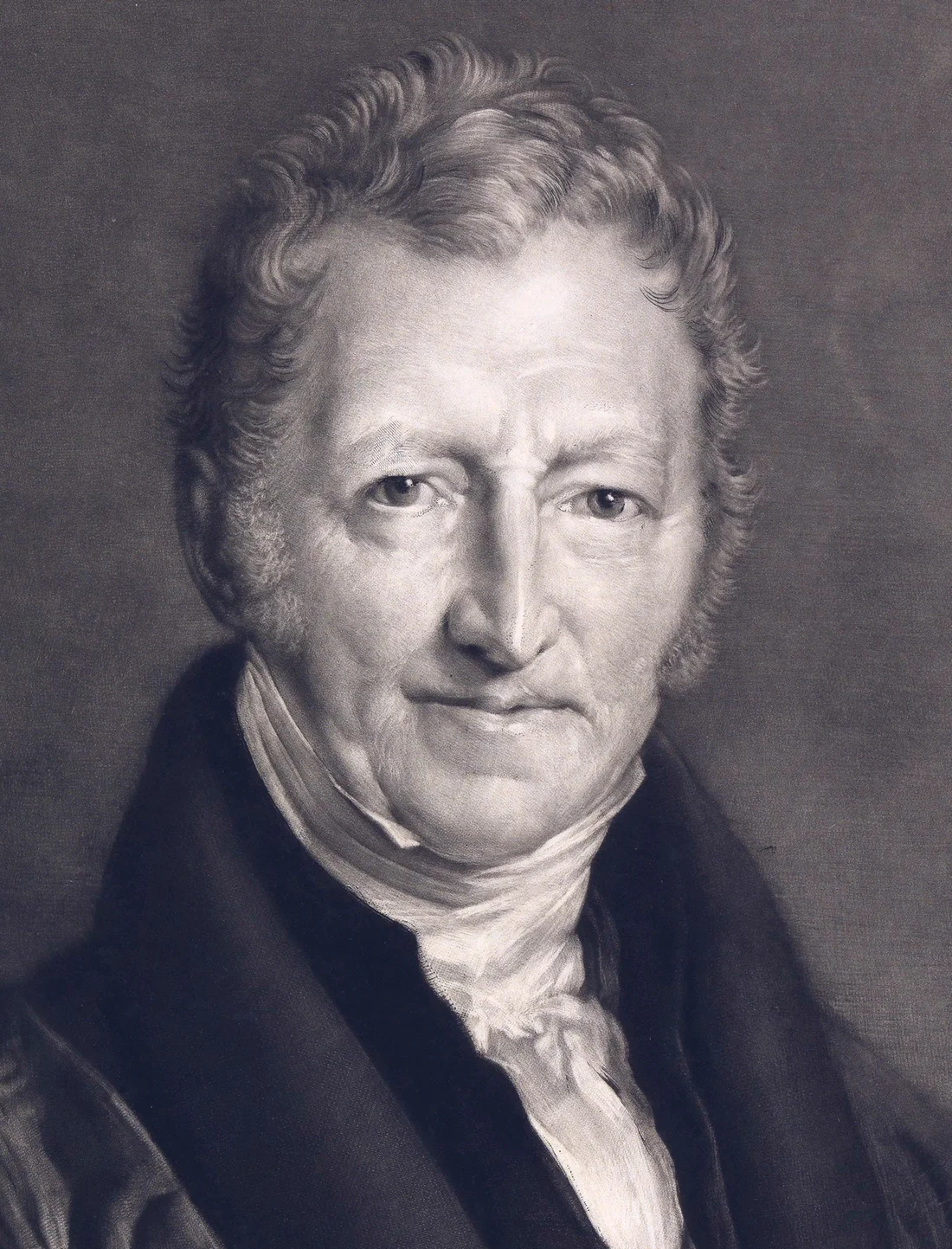
Thomas Robert Malthus The English economist and clergyman framed population growth as a recurring pressure against subsistence. via Wikimedia Commons

Parts of that account described the preindustrial world well. It did not anticipate how thoroughly modern agriculture, energy, sanitation, trade, and institutions would alter the relationship between land and life. A field is finite. The amount it can grow is not fixed independently of seed, water, nutrients, knowledge, machinery, storage, transport, prices, and peace.
The twentieth century made both sides of the argument harder to ignore. World population accelerated, and Paul and Anne Ehrlich’s 1968 Population Bomb declared that mass starvation was unavoidable. The timing gave the warning force: the annual population growth rate had recently reached its peak, and each additional billion people was arriving faster than the last.
New wheat, rice, and maize varieties spread through parts of Asia and Latin America during the same period. The Green Revolution was not one seed or one heroic scientist. Higher-yielding crops arrived as part of a package that included irrigation water, fertilizer, pesticides, extension services, and public and private institutions capable of delivering them. The Food and Agriculture Organization reports yield gains of roughly 100 to 200 percent for those three cereals in developing countries from the late 1960s across the Green Revolution period.
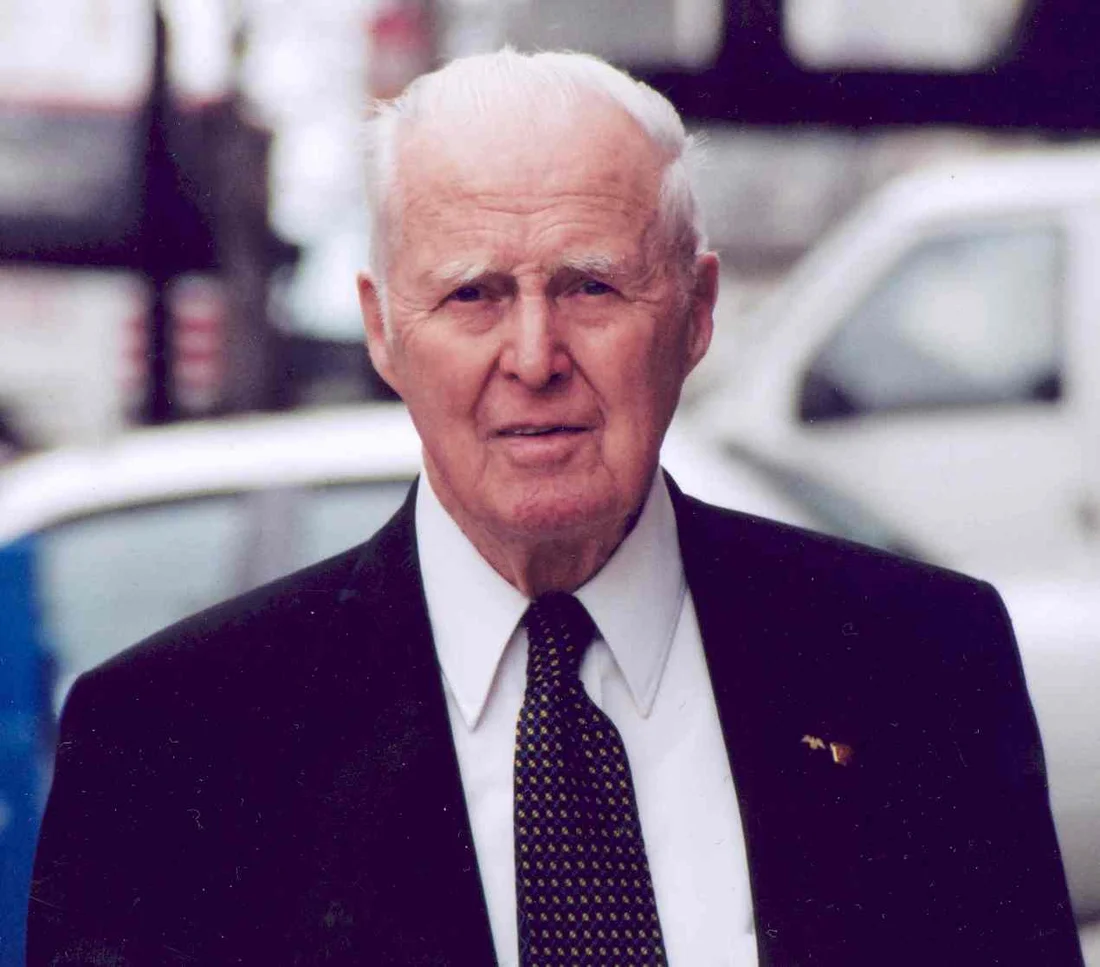
Norman Borlaug Borlaug’s wheat breeding became one part of a larger agricultural system that increased harvests across several regions. via Wikimedia Commons
.jpg)
Those gains changed carrying capacity in practice. They also brought costs and uneven benefits. Fertilizer and pesticide use polluted water, the package favored places with suitable soils and reliable water, and many farmers could not afford its inputs. A narrow concentration on major cereals left other crops and places behind. Higher yields can reduce pressure to cultivate additional land, but only when conservation or restoration keeps the nominal saving from being lost to rebound or expansion elsewhere.
I don’t think the history supports either fixed-limit fatalism or automatic faith in invention. People face physical constraints, respond to them, and sometimes create new problems while solving old ones. Carrying capacity is partly cultivated.
When population became a policy target
The fear of scarcity did not remain an argument among writers. After the Second World War, governments and international organizations increasingly treated population growth as a development problem to be managed. India adopted the first national family-planning program in 1952. The 1974 World Population Conference in Bucharest placed population policies inside development planning while also affirming that people should determine the number and spacing of their children freely and responsibly.
That principle was not always honored. Programs in several countries used targets, strong incentives, or coercion. During India’s Emergency in the 1970s, sterilization drives became notorious. China’s one-child policy later enforced birth limits through fines and pressure and, in some cases, forced sterilization and abortion. A demographic target gave administrators a reason to treat intimate lives as instruments of state planning.
The 1994 International Conference on Population and Development in Cairo marked a change in official emphasis. Its Programme of Action centered reproductive health, women’s interests, and individual rights rather than aggregate targets. It did not end coercion or settle every moral question about reproduction. It did reject the idea that a government owns the fertility of its population.
This history complicates any new concern about low fertility. The population-bomb era was wrong to treat straight-line growth as destiny, and agricultural ingenuity expanded what the world could support. It was right that material limits and environmental damage are real. Its worst policy failures also leave a boundary the rest of this book should not cross: people cannot be reduced to means for producing a preferred population curve.
The deeper demographic reversal came from another direction. Population first surged because deaths fell while births remained high. Then births fell too.
Citations
- Thomas Robert Malthus, An Essay on the Principle of Population, 1798.
- Paul R. Ehrlich and Anne H. Ehrlich, The Population Bomb (Ballantine Books, 1968).
- Food and Agriculture Organization of the United Nations, World Agriculture: Towards 2015/2030, 2002.
- United Nations, Department of Economic and Social Affairs, Population Division, World Population Policies 2021: Policies Related to Fertility, 2021.
- United Nations, “World Conference on Population, Bucharest 1974”.
- United Nations, “International Conference on Population and Development, Cairo 1994”.