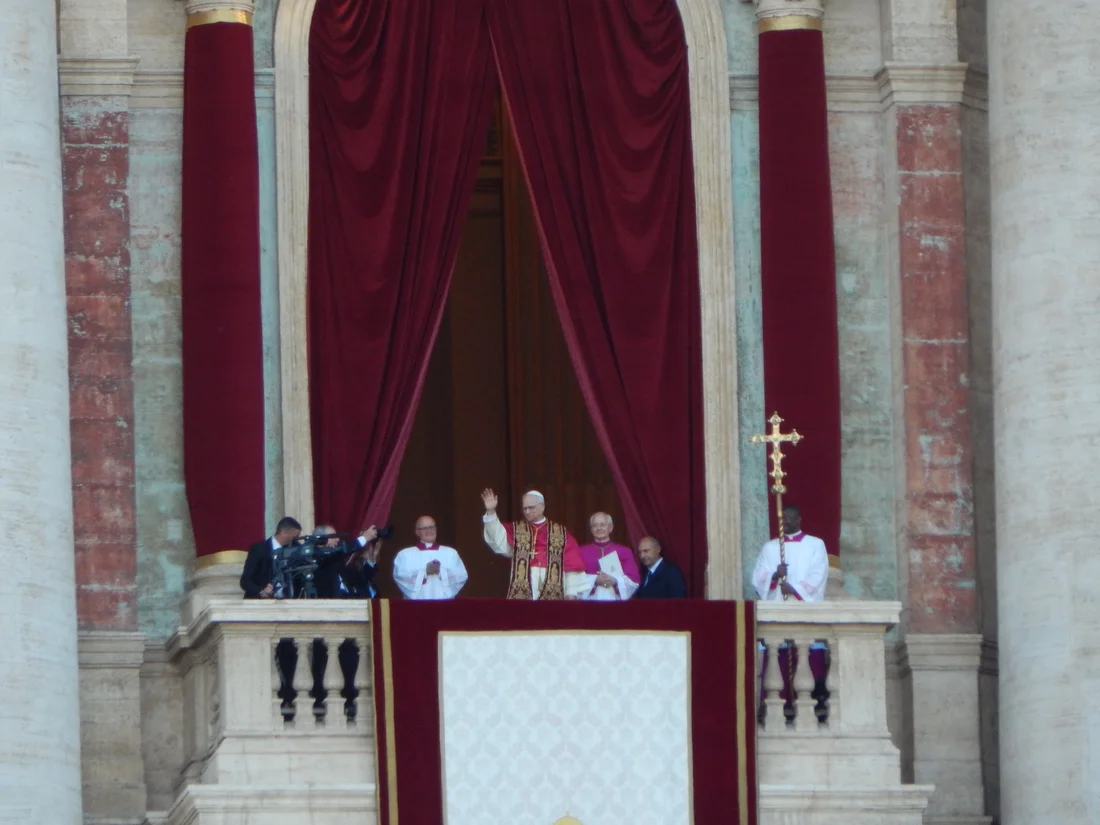
Pope Leo XIV has been on the road. Turkey and Lebanon last November. Algeria, Cameroon, Angola, and Equatorial Guinea in April. Spain in June. A deliberate stop on the migrant island of Lampedusa on the Fourth of July. Peru is still expected later this year.
The one place he has not set foot is the United States.
This is not an accident. The Vatican confirmed in February that no American itinerary exists for 2026. The first pope born in Chicago, the first dual American-Peruvian citizen to wear the white cassock, has chosen to stay away from the country that produced him. The question is no longer whether he will come. It is when, and under what conditions the visit will finally make sense.
The Calendar and the Optics
On July 29, after a peace concert at Castel Gandolfo, Leo sat for a brief interview with NBC. Asked whether Americans would see him soon, he answered with the careful precision that has become his public style.
“They will see me there. By coincidence, today we were looking at the calendar for the next couple of years. Nothing is set in stone yet, but I certainly hope to be there soon.”
(The full exchange is preserved in the Vatican News summary of the NBC interview.)
A couple of years from mid-2026 points to 2027 or early 2028. That window is already constrained. Vatican practice generally avoids major trips to a country during its election season. 2026 was a midterm year. 2028 is a presidential year. The cleaner slot is 2027, after the midterms settle and before the next presidential cycle heats up.
Leo has made the logic explicit in other ways. He has repeatedly described himself as “the pope who happens to be American,” not the American pope. The distinction is not semantic. A first-year homecoming would have framed his entire pontificate as a return to the United States. He refused the frame.
Why the Delay Feels Calculated

The political temperature is real. Leo has criticized the Trump administration’s immigration crackdowns and its involvement in the Iran conflict. The White House has returned fire. Vice President Vance once called Vatican positions on migration “troubling.” Trump himself has traded barbs. A papal visit under these conditions would force a White House meeting that neither side appears eager to stage-manage.
Yet the deeper reason is institutional. Leo spent more than a decade as a missionary and bishop in Peru. He holds Peruvian citizenship. His formative years as an Augustinian were not spent in the American hierarchy’s power centers. When he looks at the global Church, the United States is one large, wealthy, noisy province among many. Africa is where the numbers are growing. Latin America is where he already has pastoral roots. Europe still requires repair.
Francis never returned to Argentina. John Paul II returned to Poland early and often. Benedict visited Germany. Each choice revealed a different relationship to the place of origin. Leo’s choice so far is closer to Francis’s: the universal pastor does not begin by privileging the soil that produced him.
There is also a practical layer. The apostolic nunciature in Washington has been in transition. Organizing a full papal visit without a settled diplomatic channel is messy. The Vatican prefers clean logistics.
What a Visit Would Actually Look Like
When the trip finally happens, it will not be a simple hometown parade. Modern papal visits to the United States follow a recognizable pattern established since Paul VI’s 1965 day trip to New York and the United Nations. John Paul II made seven trips. Benedict came once, in 2008. Francis came in 2015 for Washington, New York, and Philadelphia. (See the full historical list.)
Leo will almost certainly include the United Nations. He will almost certainly visit Chicago. The rest of the itinerary will be shaped by the American bishops and by the issues he has already chosen to emphasize: migration, peace, and the dignity of the person in an age of artificial intelligence and economic inequality.
The risk is that any American visit becomes another chapter in the ongoing culture-war narrative. Leo appears determined to deny that narrative oxygen for as long as possible. By arriving later, after he has already established his voice in Africa, the Mediterranean, and Latin America, he arrives as the pope who has already spoken, not the American who is finally coming home.
The Speculative Window
The most plausible window is the second half of 2027. By then the midterms will be over. The political temperature may have cooled or at least shifted. Leo will have completed his first major Latin American journey and solidified the pattern of his travel. A 2027 visit would still fall inside the “couple of years” he mentioned in the NBC interview.
A 2028 trip is less likely unless the presidential election produces a configuration that lowers the political stakes. A post-2028 visit remains possible if the current tensions harden into something more structural. Some Vatican observers have floated the idea that Leo may simply wait out the Trump presidency. That reading feels too conspiratorial. Leo has already shown he is willing to speak plainly about American policy without needing to plant his feet on American soil.
The more interesting possibility is that the delay itself is the message. An American pope who does not rush home is performing a kind of detachment that the global Church has rarely seen from its leaders. The United States is used to being the center of attention. Leo is teaching it, gently and publicly, that it is not.
Whether that lesson sticks will depend on what he does when he finally lands. Until then, the absence is doing more work than most presence ever manages.